eBay: Evo Design System
eBay’s product teams were designing and building in silos, with each surface using its own patterns, tokens, and workflows. As Design Lead on the Evo Design System, I helped create a single source of truth for foundations (color, type, spacing), reusable components (buttons, carousels, data viz, modals, early GenAI UI), and documentation. This case study focuses on how I defined the foundations, designed key components, and partnered with engineering and product leadership to drive adoption across eBay’s global ecosystem.
Overview
eBay operates at massive scale, across multiple countries, platforms, and teams. Over time, this led to a patchwork of visual styles, patterns, and workflows that slowed teams down and fractured the experience.
The Evo Design System was created as a single source of truth: a unified set of foundations, components, and guidelines to support product teams globally.
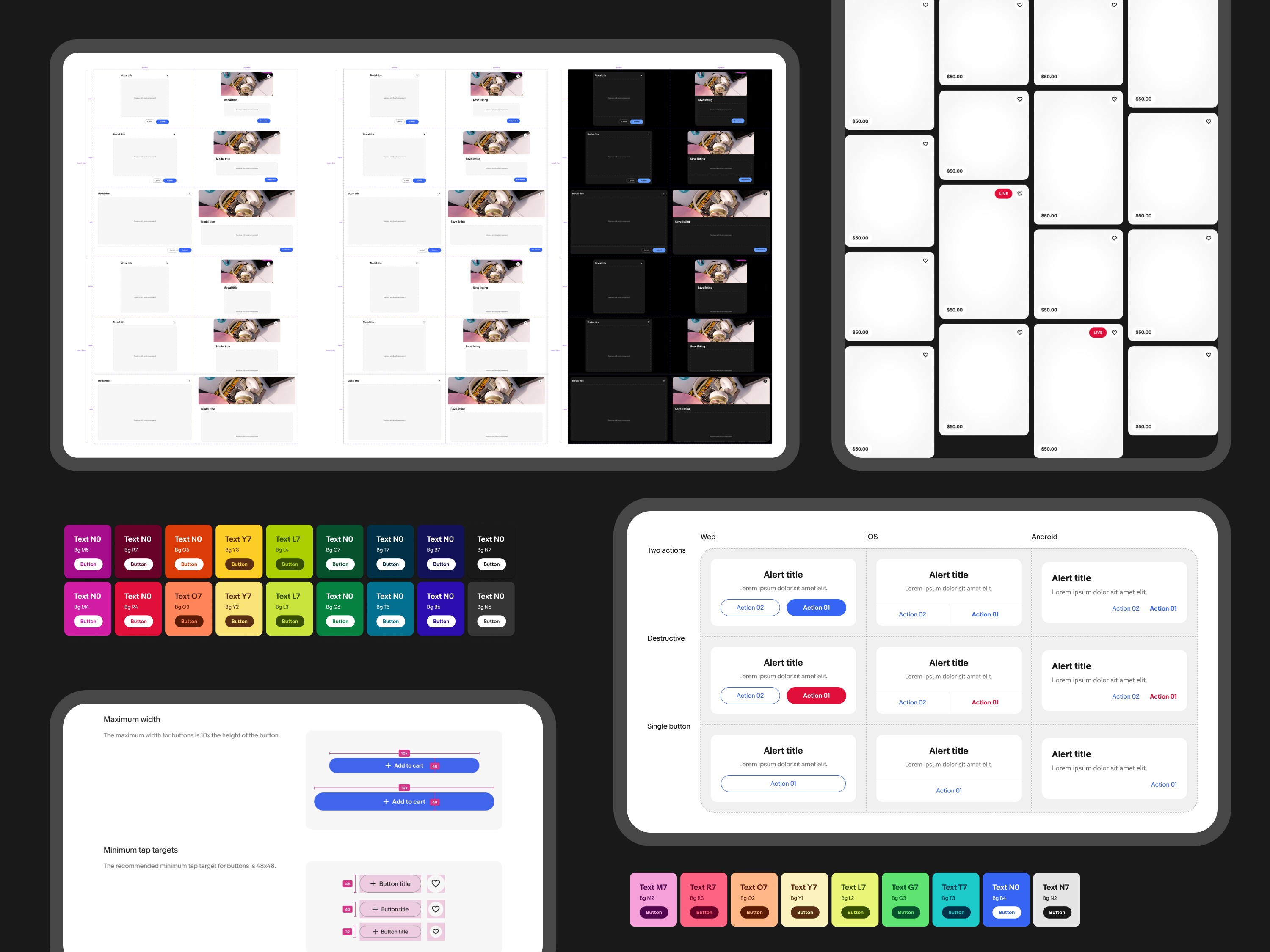
As a Design Lead on Evo, I focused on defining foundational principles, establishing tokens (colors, typography, spacing, etc.), and designing reusable components such as buttons, carousels, data visualization elements, modals, and early generative AI components.
The system gave eBay a scalable design foundation that reduced inefficiencies, improved UX consistency, and could evolve with new product and platform needs.
Problem
Fragmented patterns: Different teams had built their own components and visual styles, which led to inconsistent experiences and duplicated effort.
No shared foundation: Colors, typography, spacing, and interaction patterns were defined ad hoc, making cross-team collaboration and handoff difficult.
Scaling across surfaces: Components needed to work seamlessly across web, mobile, and emerging experiences without breaking accessibility or brand consistency.
Adoption friction: For a system to actually get used, it had to be easy to understand, easy to implement, and clearly aligned with product and engineering priorities.
Stakeholder alignment: Product, design, and engineering leaders all had different expectations, and keeping them informed and invested was critical to long-term success.
Process
Audit and research
I ran a comprehensive audit of existing UI across key products and surfaces, cataloguing patterns, inconsistencies, and gaps. I also benchmarked leading design systems to define a realistic bar for foundations, accessibility, and documentation quality.System foundations
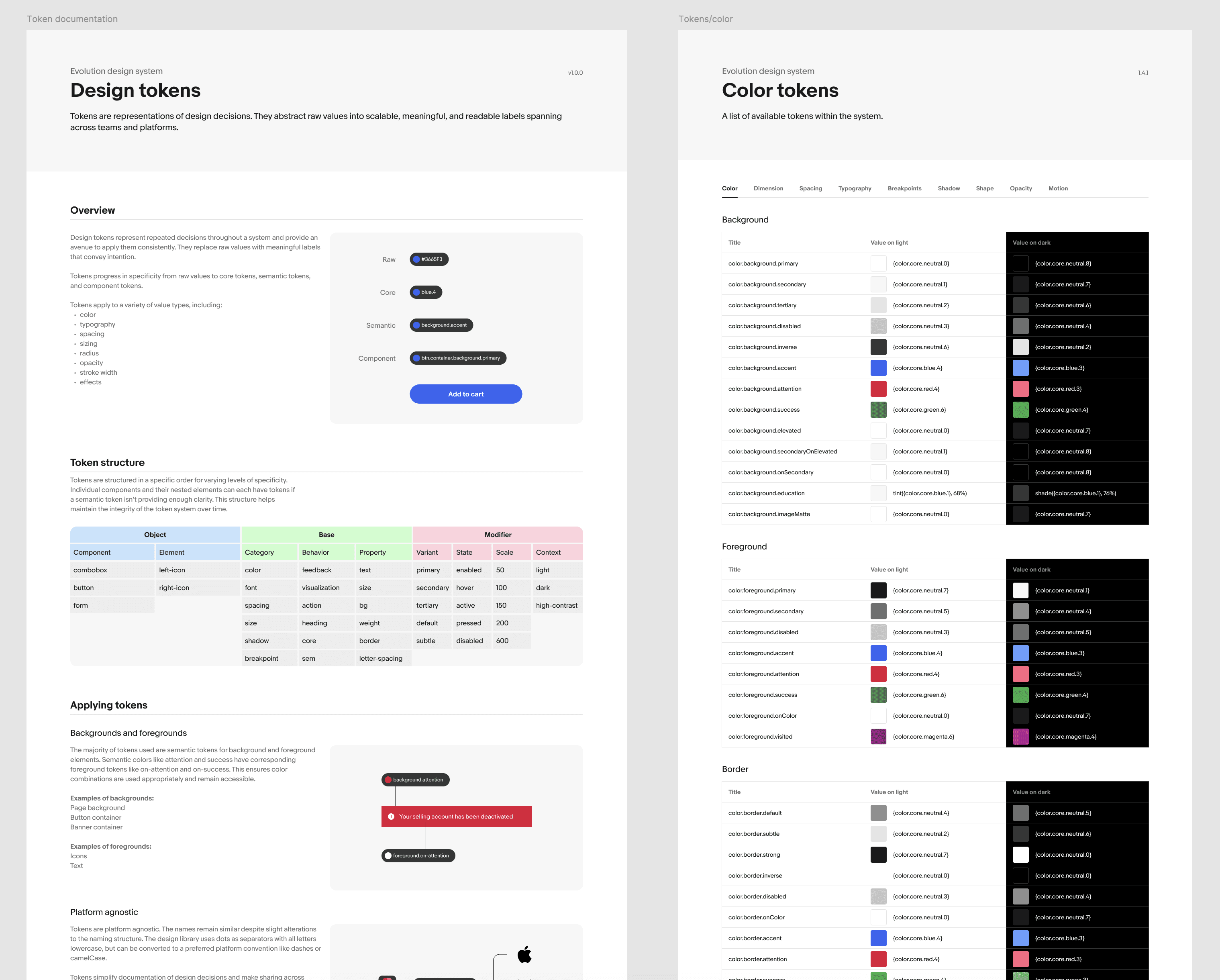
Based on the audit, I helped define Evo’s core principles and token structure. I established design tokens for color, typography, spacing, and other foundations, with a focus on scalability, accessibility, and reuse across platforms.Component design
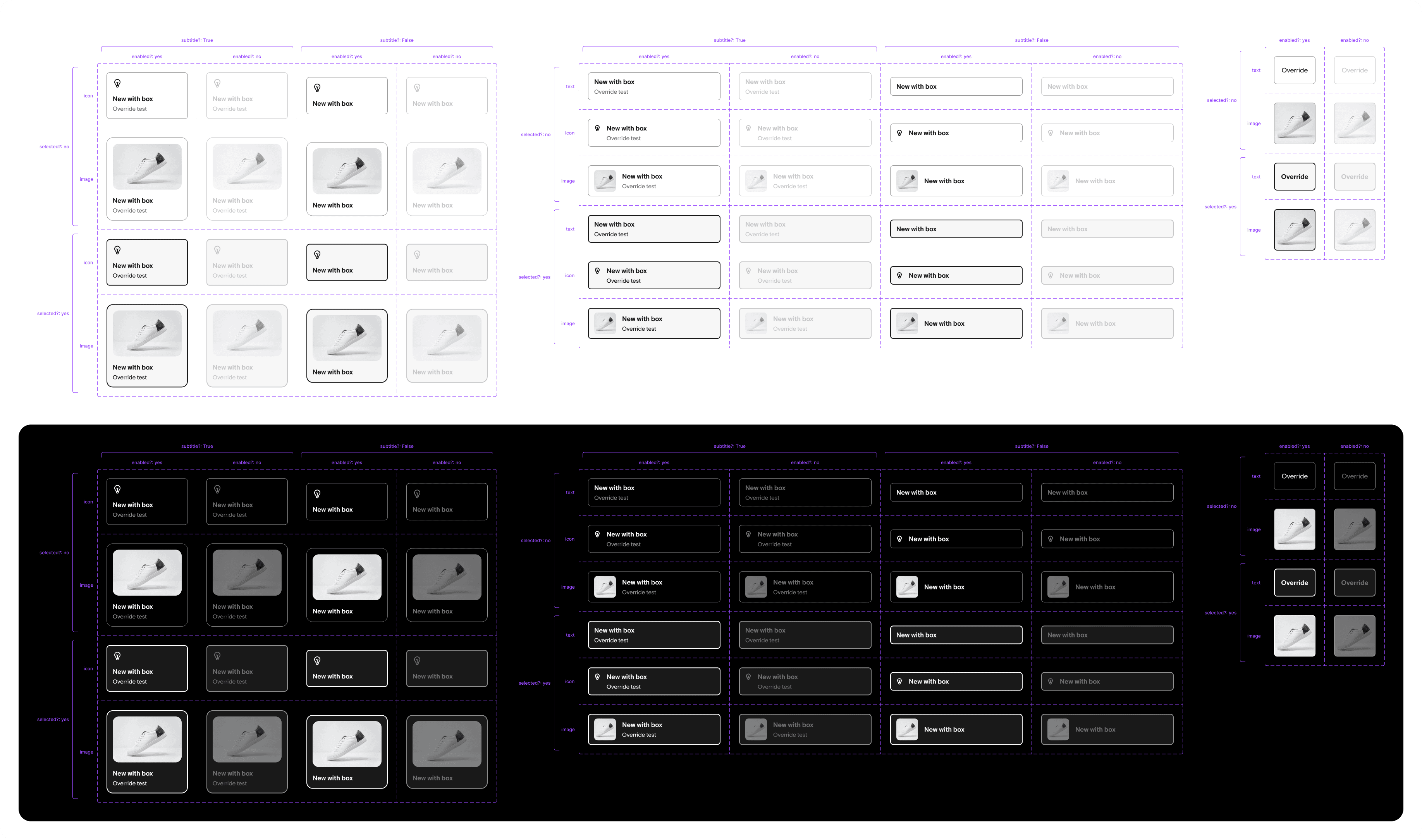
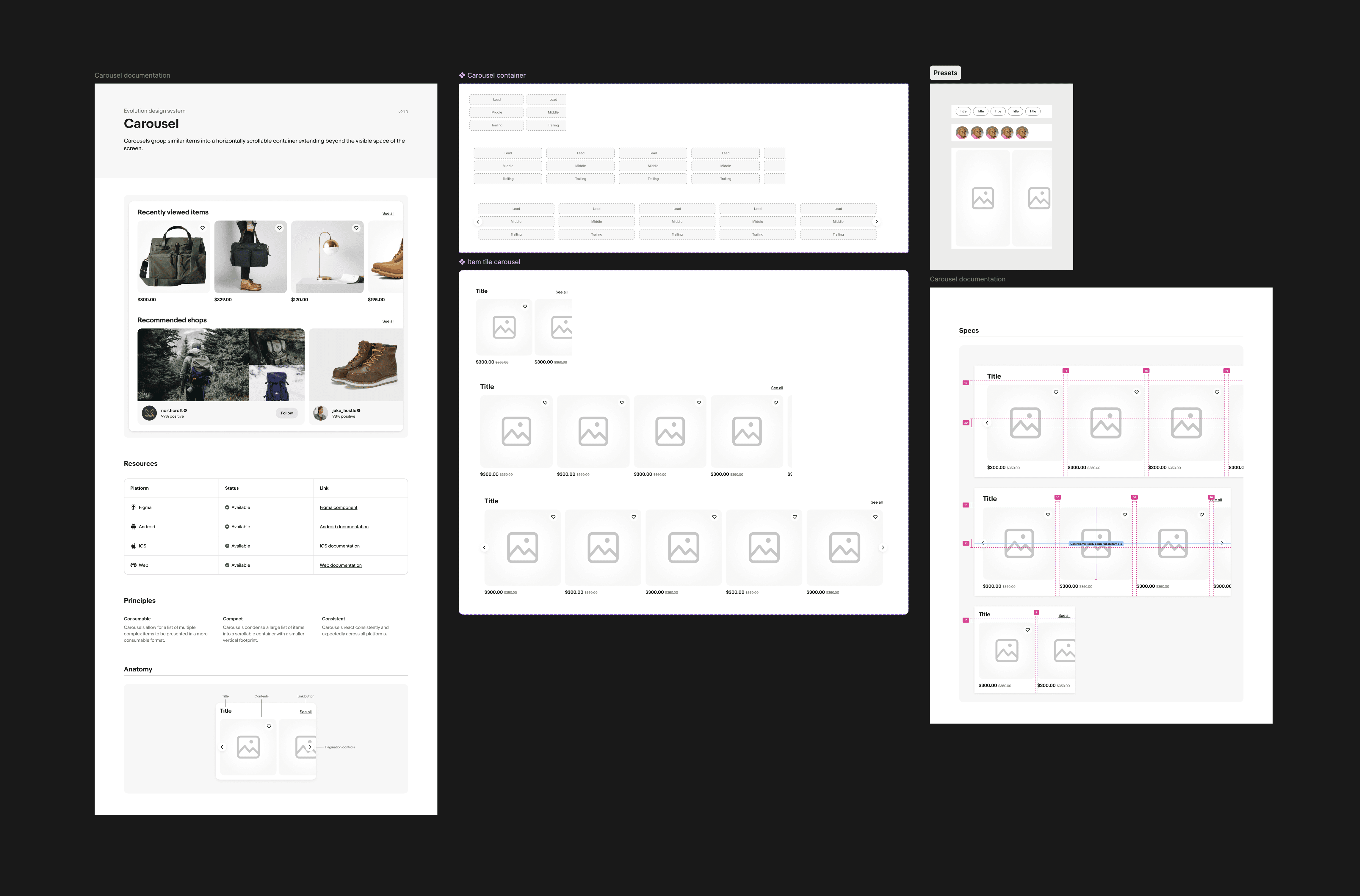
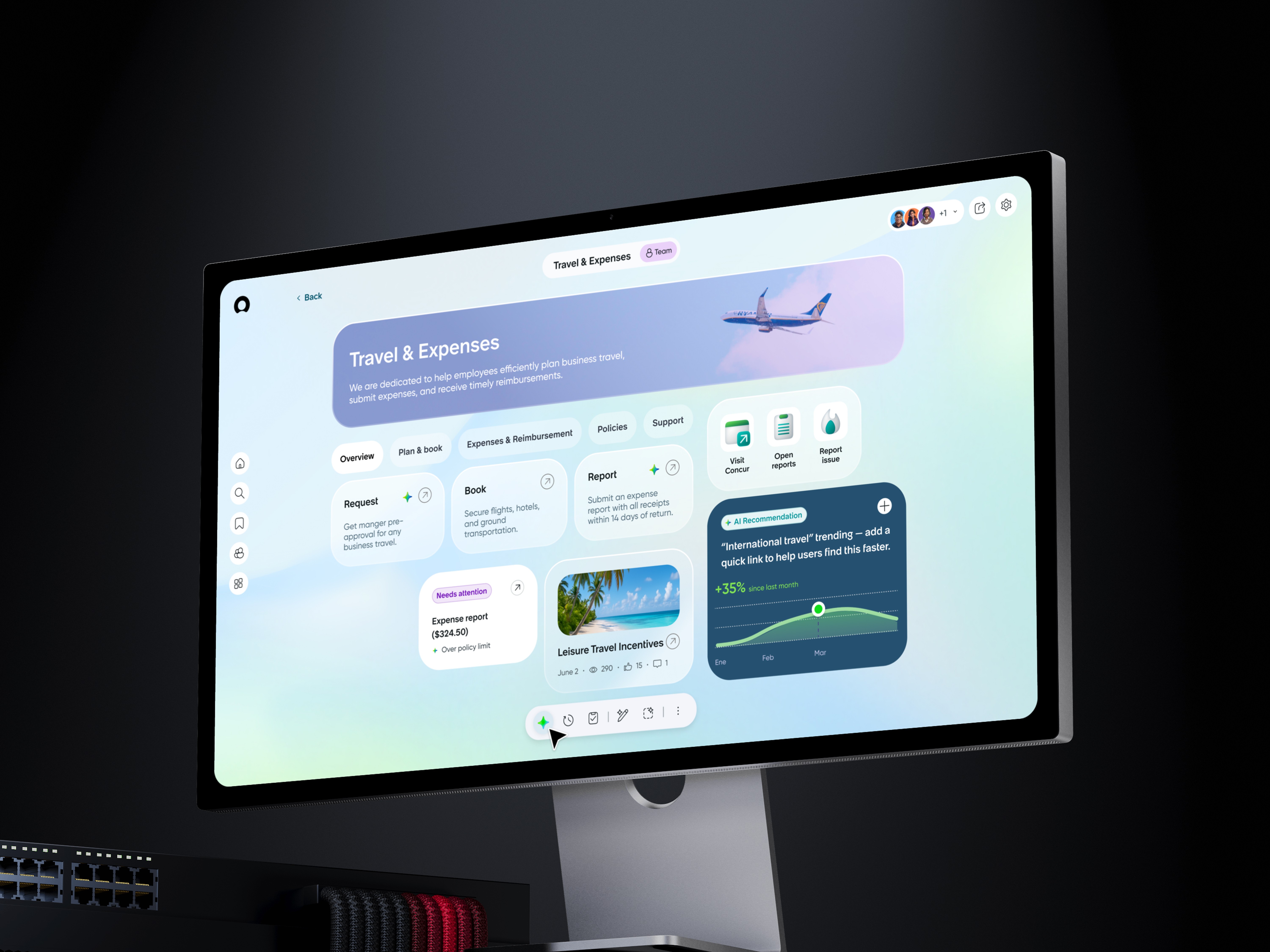
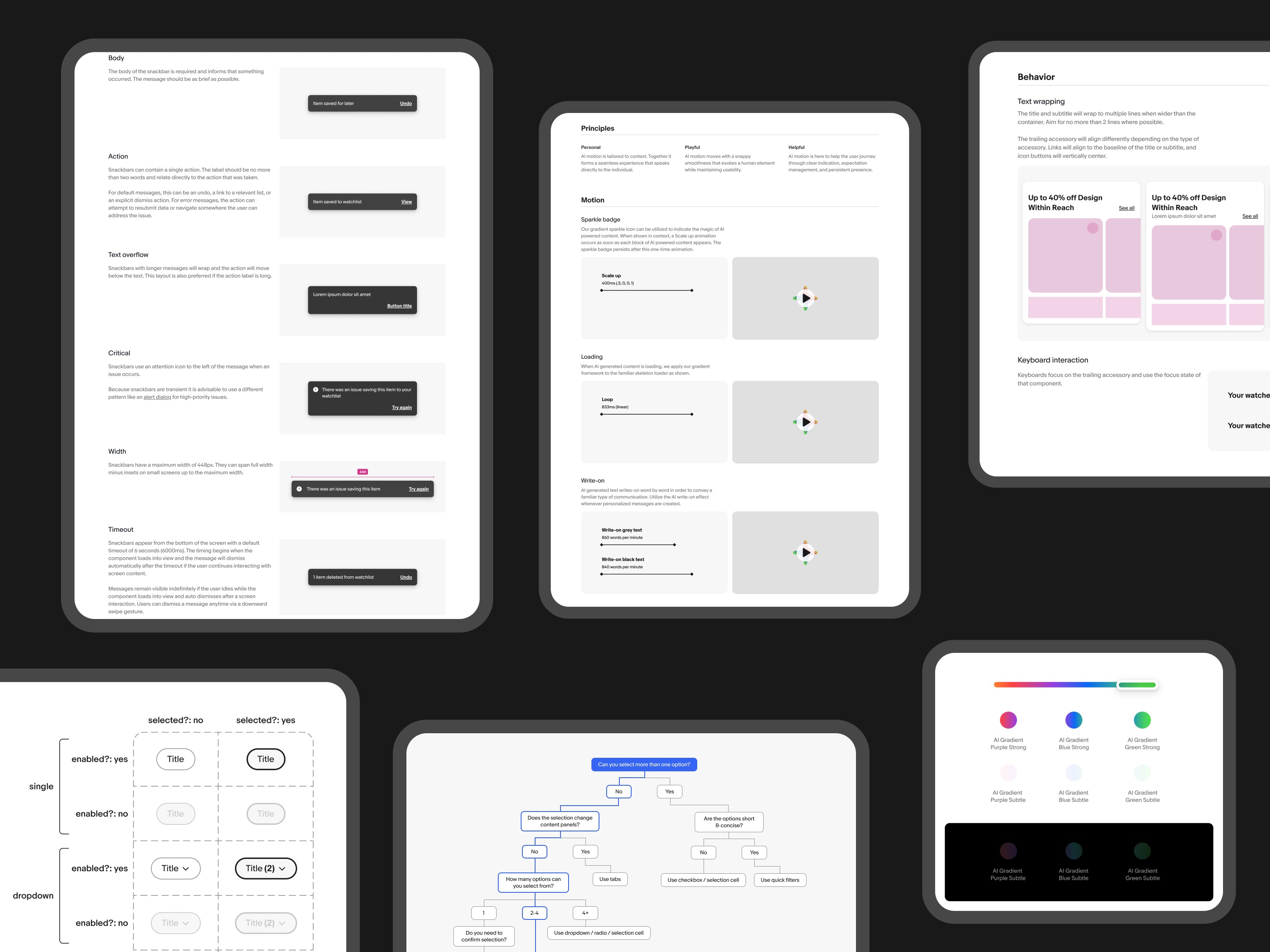
I designed modular, reusable components such as buttons, carousels, data visualization primitives, modals, and early generative AI UI patterns. Each component was built from tokens, supported key states and variants, and was flexible enough to handle different layouts and use cases.Documentation and collaboration
I authored detailed documentation for foundations and components, including usage guidance, annotated visuals, and do/don’t examples. In parallel, I partnered closely with engineering and product leadership to validate feasibility, align on API and behavior, and run regular check-ins so teams understood what was changing and how to adopt Evo in their roadmaps.
My Role
Served as a Design Lead on the Evo Design System, with a focus on foundations, components, and documentation quality.
Defined and documented design principles and tokens for color, typography, spacing, and other core foundations.
Designed key reusable components, including buttons, carousels, data visualization elements, modals, and generative AI components, ensuring they were accessible, flexible, and token-driven.
Authored component and foundation documentation with clear usage guidance, visuals, and best practices to support global adoption.
Collaborated closely with engineering and product leadership to validate implementation details, align Evo with eBay’s strategy, and support teams integrating the system into their work.
Impact
Improved efficiency: Evo reduced design and engineering duplication, streamlined design-to-dev handoff, and helped teams ship new features faster by reusing vetted components instead of recreating them.
Stronger consistency: A shared set of tokens and components improved visual and interaction consistency across eBay’s experiences, which in turn strengthened brand trust.
Higher adoption: Clear, practical documentation made it easier for global teams to adopt Evo independently, rather than relying on the core team for every decision.
Scalable foundation: The system created a flexible framework that could evolve with new product surfaces and technologies, including early generative AI experiences.